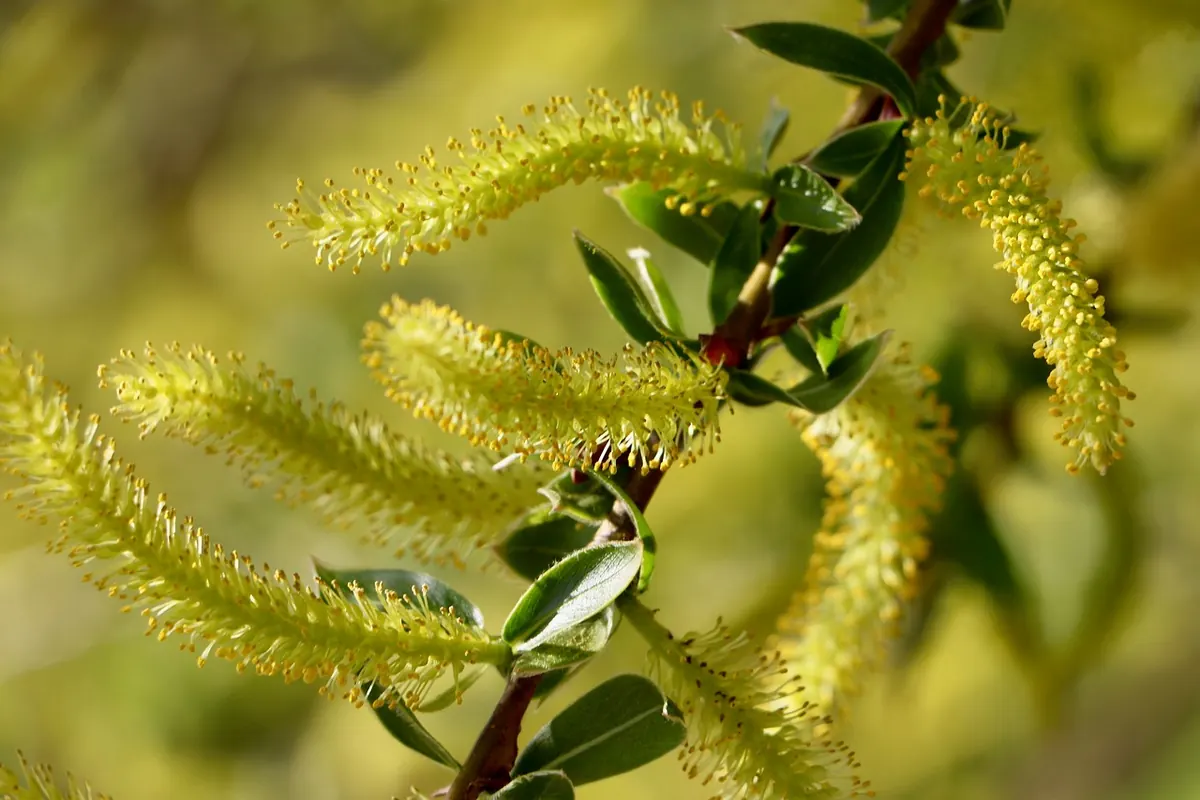
Field Comparison: Journaling a Willow in Spring Versus Autumn
Journal the same willow twice in a year: what to record on spring catkins and leaf burst, what to note in...


Some days the notebook opens and there is nothing to put in it. The heron doesn't come. The path is empty of tracks. You sat on the step for twenty minutes and the most dramatic event was a wasp inspecting the doorframe. It is tempting to close the cover and call the hour a write-off.
But a nature journal is not a highlight reel, and the entries that carry the most weight years later are rarely the ones that felt exciting at the time. They are the ordinary Tuesdays: the exact grey of a February afternoon, the weeds in the gravel, the ten minutes when the garden went quiet. Those pages become the baseline you measure everything else against. Here is how to fill them.
Weather is the most reliable subject you have, and it is almost always written badly. A forecast reads 10°C, overcast. A journal should read cold enough that I put my hands in my pockets and left them there. Sky one flat sheet, no seam in it. Ground hard under the heel, the puddles from Monday gone.
Give yourself four lines every time: what the sky is doing, what the ground is doing, what the air is doing, and what your body noticed first. Wind direction matters more than you think — a west wind and an east wind produce completely different days in the same garden, and after a season you will start to see the pattern yourself.
Then add the comparison. Warmer than yesterday? Colder than the same week last year? The first morning you needed a coat? Single observations are snapshots; comparisons are the beginning of a record.
When you genuinely cannot see anything to write about, stop looking for something interesting and run a fixed check instead. Same order, every time. It takes about five minutes and it never fails to produce six lines.
Six short lines is a complete entry. Nobody is grading it.
Weeds have three advantages over everything else you might write about: they are always there, they change fast, and nobody has written them up so many times that the language feels worn out. Plantain in the gaps between paving. Bittercress seeding in the pot you abandoned in autumn. Groundsel, chickweed, a dandelion that has decided the crack by the step is a home.
Write about a weed the way you would describe a difficult neighbour: where it lives, what it is doing, who it is pushing aside. Then look closer than feels reasonable. Is the stem hairy or smooth? Do the leaves come off opposite each other or alternate up the stem? Is it in flower, in seed, or biding its time?
Sketches help enormously here. Not good sketches — a two-inch square of gravel with four leaf shapes in it is plenty. Drawing forces you to look at the thing rather than past it, and it gives your notebook something to hold even when the words are thin.
The garden at three in the afternoon and the garden at seven are two different places, and the difference is worth recording. Where does the shadow line fall across the lawn today? Did it reach the same place as last week? Which part of the border is in sun at nine in the morning and which sits in shade until noon?
Then there are the regulars. A robin that appears at the same time each day. Ants working a peony bud. A spider rebuilding in the same corner after a night of rain. Note the time, not just the fact. Those timestamps turn into something useful by the end of a season, and you will only ever get them by writing them down as they happen.
Write the absences too. No bees on the lavender this morning, first time in weeks. An absence is data. It is frequently the most interesting thing on the page.
Keep a short list at the back of the notebook and use one without thinking about it too hard.
Some of these produce a scrap of a sentence. Occasionally one produces a page. Both count.
Nothing happened. The light went from grey to greyer. A blackbird turned the same leaf over three times and then left.
A journal kept only for notable days gives you a string of moments with nothing between them. The flat entries are the connective tissue. They tell you what normal looked like, which is the only way you will ever notice when normal shifts.
You will not remember, in four years' time, when the leaves came off the ash tree, or whether the first frost that year arrived before or after the last mower. Your notebook will. That is the whole point of the unremarkable page.
Keep the daily entry short and the weekly one longer. Three lines on a Tuesday, date, time and weather at the top, is enough to hold the thread. Once a week, sit down for fifteen minutes and write properly — the fuller picture of what the garden or the walk has been doing.
Keep the pen clipped to the cover so there is no excuse to hunt for one. Anchor the habit to something you already do: with the first coffee, before you lock the door, after you take your boots off. Do not backfill more than a day; reconstructed entries are fiction. And if a week goes missing, don't apologise on the page. Start the next entry with the weather and carry on.
Boring days are not a failure of the journal. They are what most of a year actually looks like, and someone who writes them down is doing the real work.
Photo: Feyza Tuğba / Pexels
Journal the same willow twice in a year: what to record on spring catkins and leaf burst, what to note in...
A seven-day journaling project that tracks temperature, rain, wind and wildlife on the same route at the...
A twenty-minute garden routine that gets children looking closely: simple prompts, quick drawing tasks,...