Field Comparison: Journaling a Willow in Spring Versus Autumn
Journal the same willow twice in a year: what to record on spring catkins and leaf burst, what to note in...

Willows have a way of making a beginner naturalist stop walking. One day the twigs are bare; the next, soft gray catkins are pushing out of the buds and a riverside tree is showing the pale underside of every leaf. Pussy willow, white willow, and weeping willow are three of the most familiar willows in parks, hedgerows, and wet ground. They are easy to tell apart once you know what to look at, and a journal helps. A few notes on leaf shape, twig color, and the tree’s silhouette will do more than a dozen half-remembered names.
Willow identification can feel slippery because willows hybridize and because common names vary by region. That is why it pays to record several features at once rather than relying on one leaf or one catkin. Before you try to name a tree, make a simple field record.
A hand lens is useful for leaf hairs and tiny teeth, but most of the clues you need are visible at arm’s length. Add the date, weather, and a rough location note to every page.
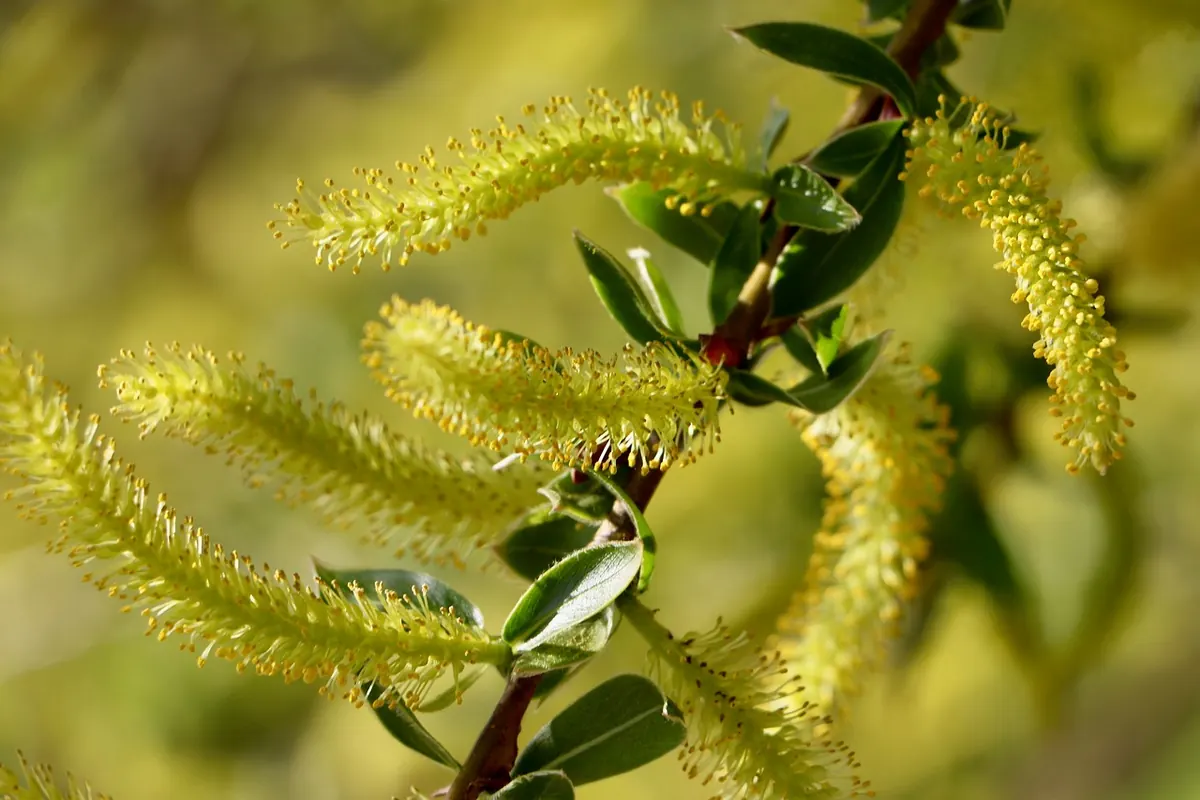
Pussy willow is less one exact species than a useful common name. In Europe it usually means goat willow, Salix caprea; in North America it often means Salix discolor. For journaling, treat it as a group of early-catkin willows with broad leaves and a shrubby or small-tree habit.
The catkins are the giveaway: soft, silvery-gray, and usually opening before the leaves. They sit on stout twigs with large buds. The leaves, when they arrive, are broader than those of white or weeping willow, with wavy edges and a dark green top. The underside is grayish and slightly hairy. The plant often forms a rounded shrub or a small tree with several stems.
Look for pussy willow at damp woodland edges, in hedgerows, along marsh margins, and beside streams. In early spring, draw the same catkin three times over a few weeks: tight bud, silver catkin, and the stage when pollen turns the male catkins yellow. Note the twig color and the size of the buds. Write one line about the weather, because catkins and insects respond to temperature. A small color swatch beside the sketch will help you remember the exact gray.
White willow, Salix alba, is the tree that makes a riverbank look silver in a breeze. It is a medium to large tree with an upright, broad crown and a strong association with wet ground. The name comes from the pale underside of the leaves, which flash as they turn.
The leaves are narrow and lance-shaped, finely toothed, and covered with silky white hairs beneath. The upper surface is green. Old bark is gray-brown and deeply fissured; young twigs are flexible and often yellow-green to brown. Catkins appear with the leaves rather than before them. The overall shape is upright and spreading, not drooping like a weeping willow.
White willow turns up along rivers, lake edges, wet meadows, and sometimes in planted rows. On your journal page, sketch a single leaf large enough to show the tip, the base, and the teeth. Then turn it over and note the color in words: chalk white, silver, or gray-green. Draw the branch angle from the trunk. Look at the bark low down and record the pattern of fissures. White willow can hybridize with other willows, so add a note about any nearby willow species.
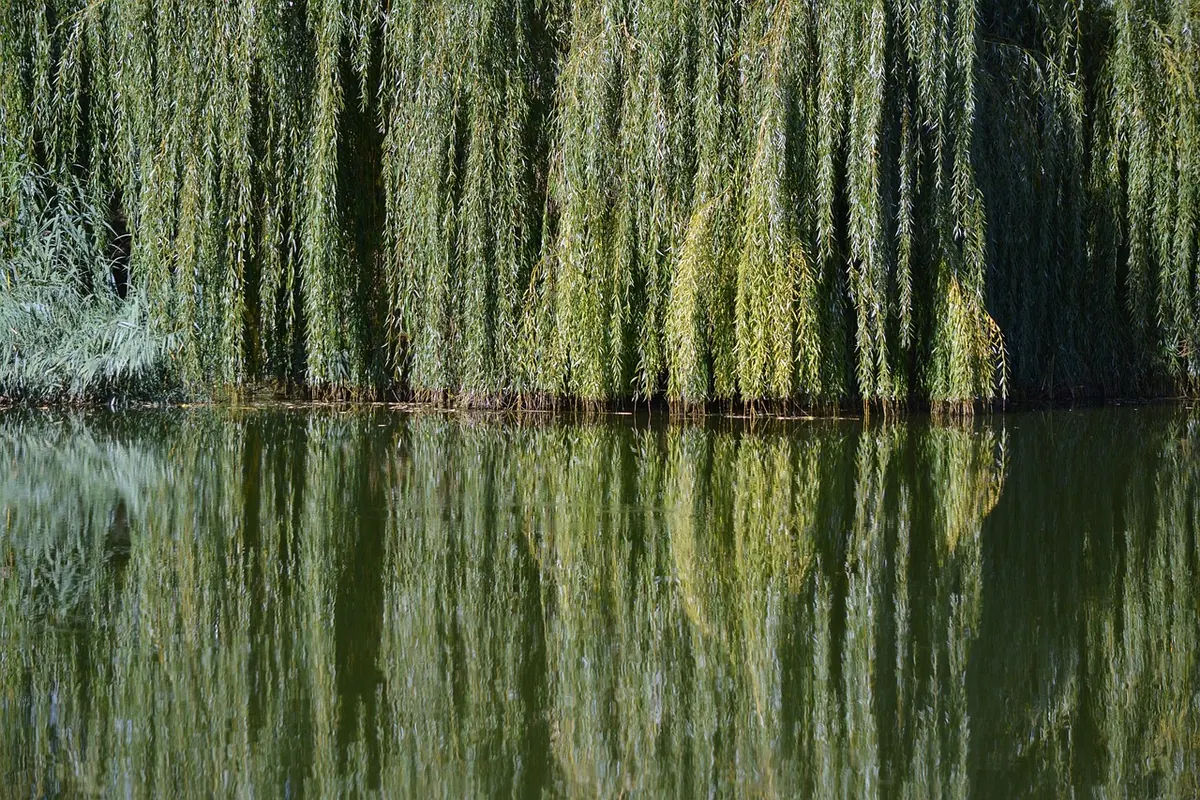
Weeping willow is recognized first by its outline. Long, slender branches sweep down from an arching crown, sometimes reaching almost to the ground. Most trees seen in parks and gardens are Salix babylonica or a hybrid, Salix x sepulcralis. They are usually planted, which is itself a useful clue.
The leaves are long and narrow, green on both sides rather than conspicuously silvery beneath. Twigs are slender and often olive or yellow. The bark becomes gray and ridged with age. Catkins appear with the leaves. The weeping habit is strongest in mature trees; young plants can look more upright, so check the leaves as well as the silhouette.
Weeping willows grow beside ponds, in parks, in gardens, and on moist soil. Start with a quick silhouette sketch from a distance, noting how far the branches hang and whether they touch the water. Then move closer and draw one leaf and one twig. Record whether the leaf underside is green or pale. Note the setting: a mown park, a muddy pond edge, a paved square. These context notes make your page more useful than a name alone.
When two willows grow near each other, a comparison page is worth more than two separate sketches. Use the same layout for each tree and fill it in on the same day.
Add a “confusion note” at the bottom of the page. Write what you almost mistook the tree for and which feature corrected you. That sentence will teach you more than a tidy label.
Choose one willow you can visit easily. Go three times in a season: once in early spring, once when leaves are full, and once after leaf fall. On each visit, record the date, weather, one sketch, and three notes about leaf, twig, or bark. Do not try to identify a willow from a single fallen leaf. Look up, look down, and look underneath.
Field note prompt: What is the willow doing that the trees around it are not doing yet?
Keep a willow calendar across the year. The dates when catkins open, leaves unfold, and branches become bare will become your most reliable identification tool.
Photo: VeleMarinkovic / Pixabay
Journal the same willow twice in a year: what to record on spring catkins and leaf burst, what to note in...
A seven-day journaling project that tracks temperature, rain, wind and wildlife on the same route at the...
A twenty-minute garden routine that gets children looking closely: simple prompts, quick drawing tasks,...