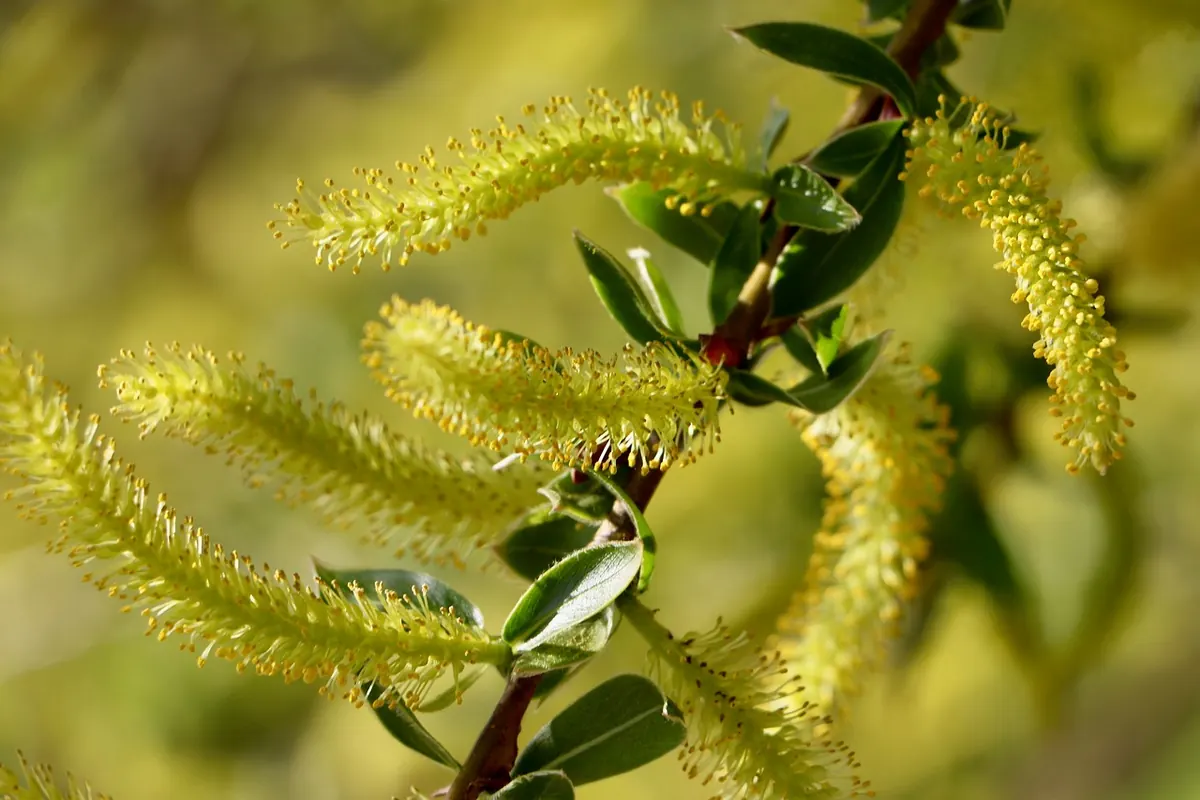
Field Comparison: Journaling a Willow in Spring Versus Autumn
Journal the same willow twice in a year: what to record on spring catkins and leaf burst, what to note in...

A fifteen-minute walk can produce a surprisingly full page. You do not need a trailhead, a backpack, or a free morning. One block, one pocket notebook, and a loose plan are enough. The trick is to decide in advance what you are looking for. This checklist covers weather, sounds, plants, insects, and traces, in the order you will likely meet them. Keep it small. Ten observations, fifteen minutes, one page. If you come home with six good notes, the walk worked.
Weather is not background. It sets the terms for everything else. Before you start walking, stand still for thirty seconds and record the conditions as if you were describing them to someone who cannot go outside.
1. Sky and cloud cover. Note the amount of blue, the type of cloud, and whether the cover is thickening or breaking. “Half cloud, flat gray to the west” is more useful than “cloudy.” If you have a phone, take one photo of the sky, then put the phone away. The note is the point, not the image.
2. Air on skin. Write the temperature in plain terms, plus wind direction and strength. “Cool, still, damp” or “warm in sun, cold in shade, breeze from the south.” Notice whether the air feels heavier under trees or near a wall. This is the first item that changes block by block.
3. Light and shadow. Look at how shadows fall and where the light lands. Is the pavement bright while the lawn is dull? Are shadows sharp or soft? A low sun makes bark and stems stand out; an overcast sky flattens color. Jot one sentence about what the light is doing, not just whether it is sunny.
Sound is the easiest thing to miss because it does not stay still for inspection. Walk for two minutes without talking, then stop. Listen in layers instead of trying to catch everything at once.
4. Near, middle, and far sounds. Divide the soundscape into three rings. Near might be your own steps, a leaf skittering, or a dog’s collar. Middle could be a lawnmower, a door, or a bus. Far might be traffic, a train, or wind in a row of trees. Write one sound from each ring. This keeps you from listing only the loudest thing.
5. The one sound you cannot name. There is almost always a sound you recognize but cannot label. A dry rattle in a hedge. A low hum near a streetlight. A sharp chip from a shrub. Describe it in words you already have: rhythm, pitch, length, repetition. “Three fast ticks, then a pause” is a real observation. You can look it up later. Do not chase the source into someone’s garden.
Plants are the steady part of the walk. They do not fly off when you look at them. That makes them ideal for a short notebook entry, as long as you get close enough to see the details.
6. Leaf shape and attachment. Pick one plant you pass every day and look at the leaf. Is it oval, lobed, needle-like, or divided? Does it grow opposite another leaf, alternate along the stem, or circle the stem? Look at the edge: smooth, toothed, or wavy. Then look at the stem. Is it square, round, hairy, or smooth? You do not need the name to make a useful note. “Opposite, oval leaves with soft teeth, square stem, minty smell” is a solid field record.
7. Plant stage and place. Note what the plant is doing: budding, flowering, setting seed, turning color, or bare. Then note where it is growing. A dandelion in a pavement crack tells a different story from one in a mown verge. Moss on a north wall, grass pushing through a fence, ivy climbing a bin: place matters. This item takes ten seconds and gives your walk a seasonal anchor.
Insects are less cooperative than plants, so watch rather than pursue. Stand at the edge of a flower bed or a sunny wall and let the small traffic come to you. The goal is behavior, not a species list.
8. Flight or crawl pattern. Choose one insect and watch it for thirty seconds. Does it fly in a straight line, hover, zigzag, or circle? Does it crawl in short bursts or move steadily? Is it alone or in a group? A bee moving flower to flower, an ant following a crack, a fly returning to the same spot: each pattern is a note. If it leaves, write what you saw and move on. No need to catch it.
9. Where small life gathers. Look for edges and warm surfaces. A wall in sun, a puddle edge, a patch of bare soil, a hedge line, a fallen branch, or the rim of a planter. Note what is there and what is not. “Ants along the south side of the wall, no insects on the shaded side” is the kind of comparison that makes a short walk interesting. Keep your distance from stinging insects and never put your hand into a nest or under bark.
10. Evidence left behind. Traces are the quiet part of the checklist: what was here before you arrived. Look for chewed leaves, seed husks, feathers, spider webs, footprints in mud, scratched bark, or a neat hole in a leaf. Do not touch dead birds or unknown scat. A photograph and a short note are enough. Traces often give you a better story than a quick sighting, because they show use over time.
Copy this into the front of your notebook or keep it as a note on your phone. One line per item is plenty. The point is to finish the walk with a page that is specific enough to read next week.
Photo: Surprising_Media / Pixabay
Journal the same willow twice in a year: what to record on spring catkins and leaf burst, what to note in...
A seven-day journaling project that tracks temperature, rain, wind and wildlife on the same route at the...
A twenty-minute garden routine that gets children looking closely: simple prompts, quick drawing tasks,...